

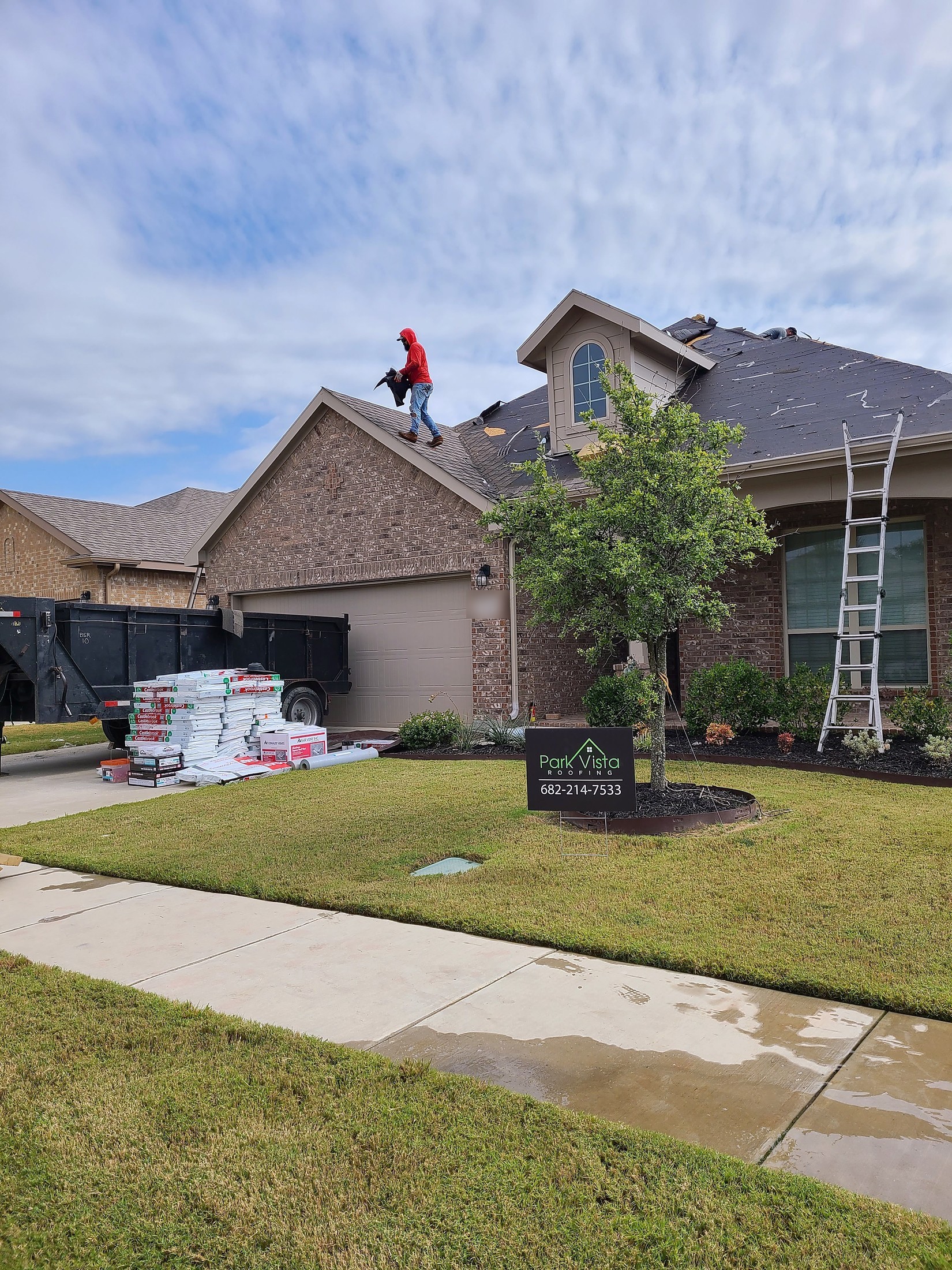
How do I know if hail damaged my roof?
Start with the soft metal around the house. Dented gutters, downspouts, vents or air conditioner fins after a storm mean the hail was big enough to damage shingles too. On the roof, hail leaves dark bruises where granules were knocked off, soft spots and cracked tabs. Most of that cannot be seen from the ground, so an inspection on the roof is the only way to be sure.
The ground tells you whether to look harder
You do not need a ladder to get a first answer. Walk around the house after a storm and look at anything made of thin metal: gutters, downspouts, window screens, the fins on the air conditioner, mailboxes and the vents on the roof you can see from the yard. Round dents or chipped paint on those surfaces show how big the hail was and which way it was blowing.
Check the ground under the downspouts too. A pile of dark sand-like granules there after a storm means granules were stripped off the shingles above. Fence boards, outdoor furniture and cars parked outside are also good witnesses. If a neighbor’s roof is being replaced, yours saw the same storm.
On the shingles, hail leaves bruises rather than holes
A hailstone rarely punches through an asphalt shingle. What it does is crush the granule surface and crack the fiberglass mat underneath. The mark looks like a dark spot where the granules are gone, often with a slightly soft feel when pressed, and the hits appear at random across a slope rather than in a line.
Wind leaves different evidence: shingles that are creased across the top, lifted or missing, usually along the edges and ridges where wind gets underneath. Both kinds of damage often show up after the same storm.
The trouble is that bruised shingles keep shedding water for a while. With the protective granules gone, the sun breaks down the exposed asphalt, the crack in the mat widens, and a leak shows up a season or two later.
Waiting for a leak can cost you the claim
Most Texas homeowner policies set a deadline for reporting storm damage, measured from the date of the storm rather than the day you notice a stain. By the time bruised shingles begin to leak, that window may be closing or already gone, and wear that has developed since the storm is harder to tie back to it.
That is why a roof inspection soon after a significant hailstorm makes sense even when nothing seems wrong inside. If the roof is fine, you know. If it is not, the damage is documented while it is fresh and clearly linked to a date.
Stay off the roof yourself
Climbing a roof to look for hail damage is how homeowners get hurt, and walking on damaged or steep shingles can make the damage worse. Photograph what you can see from the ground, write down the date of the storm, and have someone experienced do the climbing.
Related questions
What size hail damages a roof?
Hail around one inch across, about the size of a quarter, can damage asphalt shingles, and larger stones do more. Age and wind speed matter as well: an older, brittle roof is hit harder.
Can a roof have hail damage without leaking?
Yes, and it is common. Bruised shingles often keep out water for months before the damage turns into a leak.
Does hail damage show up right away?
The bruising is there right away, but it is rarely visible from the ground. Leaks and granule loss usually follow later.